
Military Divorce in Florida: Special Issues for Service Members in Hernando and Citrus Counties

Military divorce in Florida has layers of legal complexity that civilian divorces rarely face.
Service members and spouses in Hernando and Citrus Counties must navigate both Florida family law and federal military regulations, which affect where they can file, how property and benefits are divided, and even the timing of custody during deployments.
Military divorces involve unique challenges, such as dividing military pensions, managing deployment schedules, sorting out housing allowances, and determining healthcare benefits. These all require specialized legal know-how.
If you don’t understand these differences, you could lose thousands in benefits or run into custody headaches when duty stations change. Federal laws such as the Servicemembers Civil Relief Act and the Uniformed Services Former Spouses’ Protection Act add even more rules on top of Florida’s divorce laws.
These protections and requirements don’t exist in civilian divorces. That’s one of the main reasons why military families need to pay extra attention.
Key Takeaways
- Military divorces in Florida require following both state divorce laws and federal military regulations that don’t apply to civilian cases.
- Federal laws allow service members to postpone divorce proceedings during deployment and set specific rules for dividing military retirement benefits.
- Deployment schedules and permanent change-of-station moves create unique custody and support challenges that require special planning in time-sharing agreements.
What Is A Military Divorce In Florida, And How Is It Different From A Civilian Divorce?
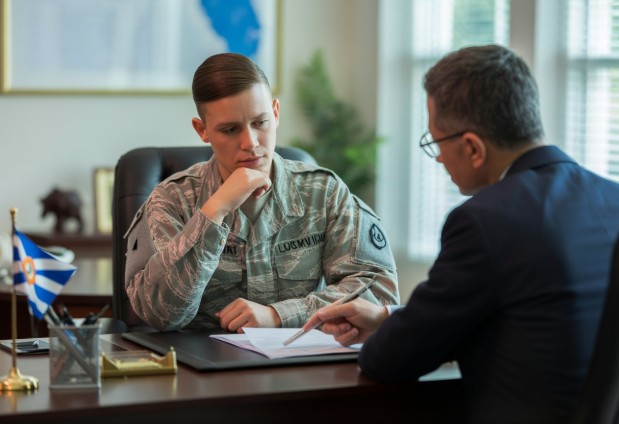
A military divorce in Florida happens when one or both spouses serve in the armed forces and decide to end their marriage. The basic steps are similar to those in civilian divorces—filing a petition, serving papers, and working through property and child custody issues.
But military divorce involves unique challenges that civilian couples never have to think about. Service members face deployments, frequent moves, and special federal laws that protect their rights.
These factors definitely complicate the process. Here’s a quick rundown:
- Federal and state laws both apply to military cases
- Deployment can delay court proceedings under federal protection laws
- Military pensions follow different division rules than civilian retirement accounts
- Residency requirements work differently due to frequent relocations
- Military benefits like healthcare and housing need special consideration
Federal law governs military pension division, while Florida state law handles alimony, child custody, and child support. Service members can postpone divorce proceedings while deployed, unlike in civilian cases.
You really have to understand both military regulations and Florida divorce laws. Military members and their spouses must follow both sets of laws to complete their divorce properly.
Facing divorce while serving or stationed in Florida? Talk to Mulligan & Associates in Brooksville for experienced, military-focused legal guidance to protect your rights, benefits, and time with your children.
Where Can You File A Military Divorce In Hernando And Citrus Counties?
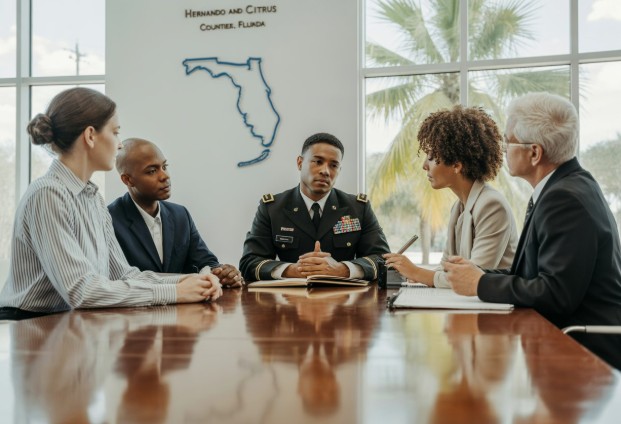
Military couples in these counties have specific places to file their paperwork. You’ll start at the local courthouse in the county where you meet residency requirements.
In Hernando County, you can file a divorce with the Clerk of the Circuit Court’s office at 20 N. Main St., Room 165, Brooksville, FL 34601.
This is where you’ll submit divorce papers and other documents.
In Citrus County, the process takes place at the Clerk of the Court’s office in Inverness. Service members should call the clerk’s office directly to check filing requirements and hours of operation.
Key Filing Locations:
| County | Filing Location | City |
| Hernando | Circuit Court Clerk’s Office, 20 N. Main St., Room 165 | Brooksville |
| Citrus | Citrus County Clerk of Court | Inverness |
Florida law requires at least one spouse to be a state resident for 6 months before filing. This applies to both civilian and military divorces.
Service members stationed in Florida can establish residency even if they keep a legal residence elsewhere. That’s a bit of a break for military families who move a lot.
Military couples should bring ID, marriage certificates, and any relevant military paperwork when filing.
The clerk’s office can help with forms, but they can’t give legal advice about complex family law matters unique to military personnel.
How Federal Laws Like SCRA And USFSPA Affect Your Florida Military Divorce
Both state law and federal protections govern military divorces in Florida. The Servicemembers Civil Relief Act shields active-duty personnel from rushed court proceedings.
The Uniformed Services Former Spouses’ Protection Act covers how military retirement pay gets divided between spouses.
SCRA – Active-Duty Delays And Protections
The Servicemembers Civil Relief Act lets active-duty service members pause divorce proceedings if military duties get in the way.
If a service member shows the court that their obligations make it tough to appear, they can request a stay of at least 90 days.
The SCRA also blocks default judgments against service members who can’t respond because of deployment or training. Courts must appoint an attorney to represent the service member before proceeding.
These protections apply to divorce cases in Florida, no matter who files first. The law aims to prevent military personnel from being penalized for doing their jobs. Still, the stay is only temporary—it doesn’t pause the divorce forever.
USFSPA – Pension Division, 10/10 Rule, And SBP
The Uniformed Services Former Spouses’ Protection Act lets Florida courts treat military retirement pay as marital property. The law doesn’t set a division percentage, but courts can award a portion to the former spouse.
The 10/10 rule matters for how payments work. If the marriage lasted at least 10 years while the service member completed 10 years of creditable service, the Defense Finance and Accounting Service can pay the former spouse directly.
Shorter marriages can still lead to pension division, but the service member has to make the payments, not DFAS.
Former spouses may also receive Survivor Benefit Plan (SBP) coverage, which provides continued income if the retired service member dies. Courts can order the retiree to keep SBP coverage for the former spouse as part of the divorce settlement.
How Military Pay, Housing, And Retirement Benefits Impact Support And Property Division
Military income includes more than just base pay, which changes how courts calculate spousal and child support.
Basic Allowance for Subsistence (BAS) and housing allowances count as part of a service member’s total income in support calculations.
Florida courts treat military retirement pay as marital property that may be divided during a divorce.
The amount a former spouse gets depends on how long the marriage lasted and how much of the service member’s career overlapped with it.
The Defense Finance and Accounting Service processes direct payments to former spouses when a court orders them. That can make things a little less messy, at least in theory.
Key factors affecting military pensions distribution:
- Length of the marriage during active service
- Total years of creditable military service
- Whether the court orders direct payment
- State equitable distribution laws
Military retirement pay calculations don’t match up with civilian pensions. Courts have to follow both federal and state rules when dividing these benefits.
The Survivor Benefit Plan (SBP) gives a former spouse continued income if the service member dies.
Courts can order service members to retain SBP coverage as part of a divorce settlement. This ensures the former spouse still receives a share of retirement benefits.
Housing allowances and other military-specific payments can bump up the support amounts service members owe. Courts count those allowances as part of the total income picture.
Spousal support calculations have to reflect the service member’s true financial situation, including all military benefits and entitlements. It’s not always straightforward, but it’s important to get it right.
Military benefits are too valuable to risk. Let our experienced family law team review your retirement, SBP options, and support calculations before you sign anything. Contact today.
How Deployment And PCS Moves Affect Time-Sharing And Custody In Florida
Military service brings some tough challenges for parents who want to stay close to their kids. Deployment and PCS orders can really shake up custody arrangements in Florida.
Florida law actually protects service members from permanent custody changes based just on military obligations. A court can’t use deployment or temporary duty alone as the reason to modify time-sharing agreements.
Florida Statute 61.13002 sets out rules for military parents regarding time-sharing and parental responsibility.
This law works in conjunction with the Servicemembers Civil Relief Act to offer additional protection.
Temporary modifications sometimes make sense during deployment. The changes only last while the parent is away and revert to normal once they return.
Courts usually try to keep the child connected to the deployed parent, if possible.
Military parents can allow trusted family members to exercise their visitation rights during deployment. Grandparents or other relatives might step in to keep those family bonds alive.
PCS moves are a different animal compared to temporary deployments. When a service member receives orders to move for good, courts evaluate relocation requests through the lens of the child’s best interests.
The parent who’s moving has to show how the move benefits the child while still keeping the other parent in the picture.
Service members should update their family care plans and start talking with their co-parent about upcoming moves or deployments as soon as possible.
What Happens To TRICARE, Base Privileges, And Military Family Benefits After Divorce?
Military benefits after divorce really depend on how long the marriage and military service lasted. Former spouses need to know these rules so they can plan for future healthcare and access needs.
Eligibility Requirements
The 20/20/20 rule determines whether a former spouse retains full military benefits. Here’s what you need for that:
- 20 years of marriage
- 20 years of military service
- 20 years where the marriage and service overlap
Former spouses who meet the rule keep TRICARE and base privileges after divorce. That means they can still use the commissary, exchange, and other base perks.
Partial Qualification
The 20/20/15 rule applies when there are 20 years of marriage and 20 years of service, but only 15 years overlap. In that case, they get one year of TRICARE coverage after the divorce is final, but lose commissary access.
What Happens Without Qualification
Former spouses who don’t qualify under either rule lose benefits as soon as the divorce is final. They can buy Continued Health Care Benefits for up to three years as a short-term option.
Important Steps After Divorce
After a divorce, both sides need to update their Defense Enrollment Eligibility Reporting System (DEERS) records.
They’ll have to bring a certified copy of the divorce decree to a local ID card office to finish up.
If the kids have health insurance from the non-military parent, TRICARE can act as a second payer for their healthcare.
Special Issues For Service Members Stationed Near Hernando And Citrus Counties
Service members in Hernando and Citrus Counties face unique challenges during divorce.
Families commuting to bases like MacDill AFB or the Coast Guard Station Yankeetown often face overlapping state and federal requirements that require careful legal planning.
Residency Requirements
To file for divorce in Florida, at least one spouse has to live in the state for six months before filing. That can get tricky when service members bounce between duty stations.
Military members can still claim Florida residency even if they’re stationed somewhere else, as long as Florida is their home state.
Jurisdiction Considerations
Where a service member files can shape how the divorce unfolds, military couples often face unique decisions about where to file.
Florida lets active duty folks file in the county where they’re stationed, even if they haven’t been there long.
Servicemembers Civil Relief Act Protections
The SCRA helps protect service members during divorce cases. Active-duty military personnel get key safeguards through this law.
Service members can ask the court to delay proceedings if their military duties keep them from attending. They’re also protected from default judgments if they can’t respond because of deployment or training.
Local Court Considerations
Hernando and Citrus County courts get it—military schedules and deployments are tough. Judges often try to work around military obligations when setting hearings.
These courts know deployments can mess with custody and finances, and they’re usually willing to find solutions that work for everyone.
How Mulligan & Associates Supports Military Families In Hernando & Citrus Counties
Mulligan & Associates has been practicing family law in Hernando County since 2007, helping families navigate divorce and other family law matters throughout central Florida.
The firm really gets the tough spot military families find themselves in during divorce.
Key Areas of Support:
- Division of military pensions and retirement benefits
- Child custody arrangements during deployments
- Spousal support calculations for service members
- Property division under Florida law
- Military benefits allocation
The team helps service members untangle both state and federal regulations that touch their cases.
Military divorces come with legal nuances and stressors that civilian cases rarely encounter.
Client-Focused Approach
Mulligan & Associates works with families in Hernando and Citrus Counties.
The team assists with complex family law matters unique to military personnel, including the Servicemembers Civil Relief Act.
The attorneys handle cases for active duty service members, veterans, and their spouses.
They guide clients on how deployments can disrupt divorce timelines and custody schedules.
Practical Legal Solutions
The firm addresses issues such as base housing, TRICARE benefits, and commissary privileges during the divorce process.
They also walk clients through the 10/10 rule and how it can shake up the military pension division.
Each case receives careful attention, shaped by the family’s situation.
The legal team keeps up with changes to military divorce laws and regulations in Florida, because honestly, those rules never stay put for long.
Need help handling deployment, military pay, or the retirement division during divorce? Contact Mulligan & Associates in Brooksville for clear, strategic guidance designed for Hernando and Citrus County military families.
Frequently Asked Questions
How does deployment affect a military divorce in Florida?
Deployment can pause or delay court hearings under the Servicemembers Civil Relief Act (SCRA). Temporary custody adjustments may be made, but your parental rights continue.
Can I file for divorce in Florida if I’m stationed here but not a Florida resident?
Yes, in many cases. Being stationed in Florida can satisfy the residency requirement, even if your home of record is another state.
How is military pay counted in child support and alimony?
Florida includes base pay, BAH, BAS, and special pay when calculating support. Courts look at total income, not just base salary.
Do you have to be married for 10 years to divide military retirement?
No. The “10/10 rule” only determines whether DFAS pays the former spouse directly. Florida courts can divide retirement even without 10 years of overlap.
Will my spouse keep TRICARE or base privileges after divorce?
Only in limited situations, such as the 20/20/20 or 20/20/15 rules. Most former spouses lose base access, but children keep TRICARE eligibility.
What happens to custody if I receive PCS orders?
You may need a relocation petition. Courts consider the child’s best interests, but military parents can include protections and reinstatement clauses in the parenting plan.
Can a military divorce be paused during active duty?
Yes. SCRA allows service members to request a stay of proceedings to prevent a default judgment while deployed or unable to participate.
Do I need a special lawyer for a military divorce?
You need an attorney who understands both Florida family law and federal military rules—especially pensions, SBP elections, and deployment-related custody issues.

About the Author
Christopher S. Mulligan
Florida Bar Member in Good Standing since November 9, 2007 (Bar No. 47524) · J.D., The George Washington University Law School, 2006
Christopher S. Mulligan is a third-generation Florida attorney and founder of Mulligan & Associates in Brooksville, Florida. He drafted provisions of the 2005 Violence Against Women Act reauthorization and serves as a Guardian ad Litem and Attorney ad Litem for children in foster care. He has practiced family law in Hernando County since 2007 and represents families in divorce, custody, support, adoption, dependency, and injunction matters throughout the Fifth Judicial Circuit.